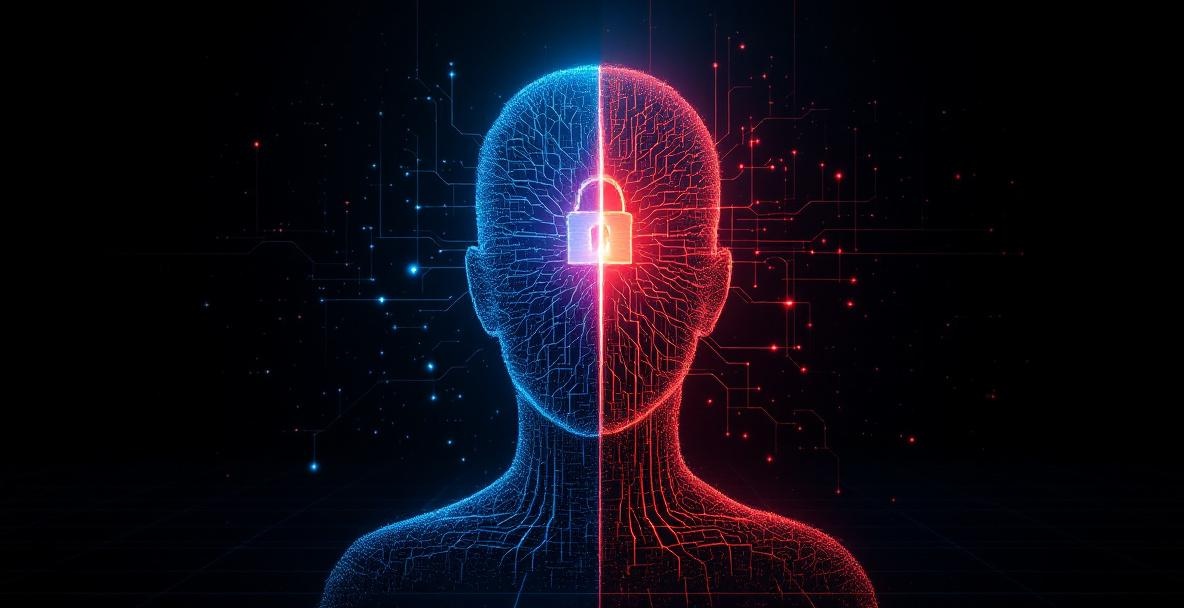
Insider Threats: The Danger Comes From Within
When organisations think about cybersecurity, they picture hackers in dark rooms trying to break in from the outside. The reality is less cinematic and far more unsettling: according to the Ponemon Institute, more than 60% of all data breaches can be traced directly or indirectly to insiders. Employees, contractors, or business partners with legitimate access to your systems.
This doesn't mean your team is full of bad actors. On the contrary — the vast majority of insider incidents arise from ignorance, carelessness, or external manipulation. But the outcome is identical: sensitive data exposed, operations disrupted, and reputational damage that can linger for years.
Three Faces of the Insider Threat
Not every insider threat looks the same. To protect effectively, you need to understand the three main categories.
1. The Unintentional Insider
This is by far the most common variant. The employee who clicks a phishing link because the email looked convincing. The manager who sends sensitive documents to a personal email to continue working from home. The IT administrator who doesn't change a default password because the system is "internal only anyway."
These people have no malicious intent. They make human errors in a digital environment that grows more complex by the day. IBM research shows that human error contributes to 95% of all cybersecurity incidents. The problem isn't incompetence — it's that our cognitive systems weren't designed for the digital threats of 2026.
2. The Malicious Insider
Less common but potentially devastating. These are employees who deliberately steal data, sabotage systems, or leak confidential information. Motivations range from financial gain and revenge to ideological conviction.
What makes this category so dangerous is that these individuals already have all the access rights they need. They know the internal processes, know where the valuable data sits, and understand exactly which security measures are in place — and where the gaps are.
3. The Compromised Insider
This category is growing fastest. Here, an external attacker uses a legitimate employee's credentials or device. Through stolen login details, malware on a home workstation, or sophisticated social engineering, the attacker gains access as if they were the employee themselves.
To your security systems, this looks completely normal. The right user logs in at a recognisable time with valid credentials. Traditional security tools — firewalls, antivirus software, access controls — are blind to this.
Why Traditional Security Falls Short
Most cybersecurity solutions are built around the concept of a perimeter: a wall between "inside" (safe) and "outside" (dangerous). But insider threats render that boundary irrelevant.
Firewalls don't protect against someone who's already inside. Antivirus software doesn't detect an employee deliberately copying files. Access controls don't help when the threat actor has precisely the rights they need.
Even modern SIEM systems (Security Information and Event Management) have a fundamental problem: they detect anomalies in technical patterns but don't understand why someone behaves a certain way. An employee logging in at 11 PM on a Friday could be a dedicated professional — or someone exfiltrating data.
The Behavioural Approach: Why Psychology Makes the Difference
This is where it gets interesting. If technical solutions fall short against insider threats, what actually works?
The answer lies in understanding human behaviour. Not just what people do on their systems, but why they do it, how they make decisions, and which psychological factors shape their risk profile.
This is precisely where Q-Method behavioural analysis — the core of Nexus-7's approach — proves its value. Rather than waiting for an incident to occur, behavioural analysis maps out:
- Risk perception: How do employees assess cyber threats? Do they systematically underestimate risks?
- Decision-making patterns: Do teams take shortcuts on security procedures when under time pressure?
- Cultural indicators: Is there an environment where people dare to report security incidents, or does a culture of fear prevail?
- Knowledge gaps: Where is the gap between what people think they know about security and what they actually know?
These insights enable proactive intervention — not by stacking more technology, but by addressing the human factors that cause incidents.
Insider Threats and Compliance: NIS2 and ISO 27001
Insider threats aren't just an operational risk — they directly impact your compliance obligations.
The NIS2 Directive, implemented across the EU, requires organisations to take "appropriate and proportionate technical, operational and organisational measures." It explicitly references supply chain security, incident response, and — crucially — human-oriented security measures.
ISO 27001 is even more explicit. Annex A contains specific controls for:
- A.6.1: Screening of personnel
- A.6.2: Terms and conditions of employment with security clauses
- A.6.3: Information security awareness, education and training
- A.6.4: Disciplinary process
- A.6.5: Responsibilities after termination or change of employment
During an audit, you won't just be asked whether you have these measures — you'll need to demonstrate they're effective. An annual e-learning module doesn't count as evidence of an effective insider threat programme.
Five Steps to Effective Insider Threat Management
A pragmatic approach that goes beyond checklists:
1. Map the Human Risk Profile
Start with a baseline assessment. How do your employees think about cybersecurity? Where are the blind spots? Behavioural analysis gives you an objective starting point — not assumptions, but data.
2. Implement the Principle of Least Privilege
Give employees access only to the systems and data they actually need for their role. Review these rights quarterly. Accounts of departing employees must be deactivated within 24 hours.
3. Create a Culture of Safe Reporting
Employees who accidentally click a phishing link need to be able to report it without fear of punishment. If people conceal incidents out of fear, you miss critical intelligence. Build a blame-free reporting culture.
4. Monitor Behaviour, Not Just Events
Combine technical monitoring with behavioural indicators. Unusual working hours, sudden access to systems outside one's role, or an employee downloading large volumes of data shortly before departure — these are signals that require context.
5. Train Situationally, Not Generically
Stop running generic security awareness training that serves everyone the same presentation. Make training specific to role, risk profile, and behavioural patterns. A finance employee faces different threats than a software developer.
The Role of Leadership
Insider threat management isn't an IT project — it's a boardroom responsibility. Organisations where management takes cybersecurity seriously and models exemplary behaviour have significantly fewer incidents.
This doesn't mean the board needs to configure firewalls. It means there's budget for behavioural analysis, security incidents are discussed at board level, and security culture is treated as seriously as revenue or customer satisfaction.
Conclusion: From Reactive to Proactive
Insider threats are not a technical problem that can be solved with technical solutions. They're a human problem that demands a human-centred approach.
By combining behavioural analysis with technical security measures, compliance requirements, and a healthy security culture, you can effectively manage the threat from within. Not by distrusting your employees, but by understanding them.
Because ultimately, the question isn't whether you'll face an insider threat. The question is whether you'll recognise it when it happens.
Want to know how your organisation scores on insider threat risk? Nexus-7 offers behavioural assessments that map the human factor in your cybersecurity — objective, scientifically grounded, and immediately actionable.